
A4 Wheel of fortune
Ip_investmentTrivia
4.4120.00 Reviews
- Version
- 3.11.9
- Installs
- 10.00M
- Age Rating
- Everyone
Screenshots

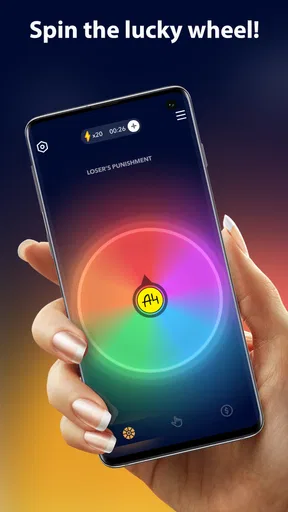

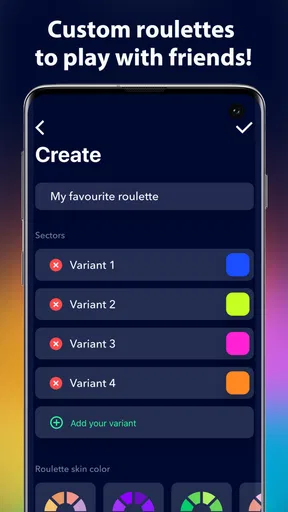
Our Review of A4 Wheel of fortune
 Analysis by Appyee
My first impression of A4 Wheel of fortune was that it wants to turn a familiar trivia challenge into a quick, personality-led game rather than a quiet quiz. The central idea is easy to understand: spin the wheel, face a challenge, and keep moving. That simplicity makes it approachable, especially when I want something I can open for a short session without learning a complicated ruleset.
This is a free trivia game from Ip_investment, built around the public identity of the world-famous blogger Vlad A4. Its store summary focuses on challenges, but the more useful way to view it is as a light, casual game for moments when I want activity and variety instead of a long campaign. It is aimed at Everyone, so it fits a family-friendly setting better than many competitive quiz titles with sharper themes.
The game has a 4.4 average from around 185 thousand ratings and has passed 10 million installs. Those figures suggest that its accessible presentation has found a large audience, although popularity alone does not make it the right choice for every trivia fan. I would recommend approaching it as a colorful, personality-driven diversion, not as a deep knowledge test or a serious tournament platform.
How the presentation turns a simple challenge into a playable mood
I look at the presentation here as more than decoration: the wheel gives each turn a little suspense, while the creator-led style makes the challenge feel playful rather than exam-like. In this section, I focus on how that mood can help a casual or family session—and where the same visual energy may distract someone who wants a direct, study-focused quiz.
The first few minutes: immediate, bright, and easy to read
The strongest part of the opening experience is its low barrier to entry. A wheel is a familiar visual object, and it gives each turn a small moment of suspense before the challenge begins. I do not need to study a manual or understand a large map of modes before playing. That matters when the intended session is only a few minutes long.
The Vlad A4 connection also shapes the tone. Instead of presenting itself like a traditional general-knowledge examination, the game feels closer to a piece of creator-focused entertainment. That makes the experience more inviting for players who already recognize the style, but it may feel less neutral to someone looking for a broad, formal quiz with a purely informational presentation.
I found the wheel concept useful because it gives the game a visible rhythm. There is a clear sequence: make a choice or spin, see what comes next, then respond. Even when the underlying challenge is simple, that sequence provides a sense of occasion. The small pause before the result helps prevent every question from feeling like another interchangeable item in a list.
That same structure can become repetitive if I play for too long without a change of pace. The wheel is a good framing device, but it cannot carry an entire session by itself. My best experience came from treating the game as a short break, where the anticipation of the next turn remained fresh rather than becoming a routine animation between similar tasks.
A visual language built around recognition
The art direction is most effective when it keeps the screen legible and the game’s identity obvious. A wheel immediately communicates chance and progression, while the creator-based styling gives the app a recognizable personality. I never felt that I had to decode an abstract interface before understanding what to do next.
This is important in a trivia game because visual clutter can compete with the question. Here, the presentation works best when it acts as a frame around the challenge. The colors, character-led identity, and game-show-like setup help create an upbeat mood, but the core task remains easy to find. For younger players or casual users, that clarity is more valuable than elaborate decoration.
There is also a practical trade-off in this approach. A strong personality can make the game more memorable, but it narrows the audience slightly. Players who enjoy creator-centered content may find the setting welcoming, while those who prefer a timeless quiz interface may see the branding as more prominent than necessary. I would choose this over a plain trivia app when atmosphere matters, but not when I want a completely anonymous question bank.
One useful habit is to judge the game by how well its visual energy supports your attention. If you are playing with a child, the wheel and recognizable presentation can make taking turns feel more like a shared activity. If you are studying facts or trying to improve general knowledge, the same visual energy may be less helpful than a focused quiz application with explanations and topic filters.
Sound, pauses, and the feeling of a turn
The audio-visual rhythm is tied closely to the wheel. A turn has a beginning, a moment of anticipation, and a result. That pacing gives even a small challenge a little dramatic shape. I like this more than interfaces that move instantly from one question to the next, because the pause creates a natural chance to think about what is coming.
At the same time, this is not the kind of game I would choose primarily for its sound design. Its appeal comes from the combination of the wheel, the creator-focused setting, and the quick challenge loop. Audio can support that mood, but the game’s identity does not depend on a large musical world or a cinematic presentation. Players who usually mute casual games should still understand the basic flow through the visuals.
For everyday use, the pacing works best in social situations. Imagine waiting for food with a friend, passing a phone around during a short break, or looking for a simple activity before a longer journey begins. Each person can take a turn, react to the result, and hand the device over. The wheel gives those exchanges a natural structure, which is something a standard list of trivia questions often lacks.
There is a small friction point here: the same pauses that make a turn feel exciting can feel slow when I am playing alone and already understand the routine. My practical advice is to use it in bursts. A few rounds preserve the show-like feeling; a long uninterrupted session makes the repeated transition more noticeable. This is a pacing issue rather than a serious flaw, but it affects whether the game feels lively or merely functional.
Where the mechanics and presentation fit together
The wheel is not just decoration. It gives the trivia format a sense of movement and makes the next challenge feel less predictable than a fixed sequence. That is the game’s clearest mechanical identity. I always know what broad action to take, yet the result of the spin adds enough uncertainty to keep the next step from feeling completely automatic.
This design suits players who enjoy light challenge without wanting to manage complicated resources, long-term builds, or demanding strategy. The game is easy to recommend to someone who says, “I want something fun, but I do not want to spend half an hour learning it.” It also works for families because the basic idea can be explained quickly and the age rating is Everyone.
It is less suitable for players who want precise control over their quiz experience. A dedicated trivia alternative may be better if you need to select a subject, set a difficulty, track detailed performance, or review explanations after every answer. The wheel introduces variety and suspense, but that comes at the cost of some control. I see that as a deliberate trade-off, not a missing feature to ignore.
Another useful distinction is between recognition and mastery. The game’s creator-centered presentation can make challenges feel more personal and entertaining, but it does not automatically make the experience educational. If my goal is to memorize facts, I would pair this with a more structured learning tool. If my goal is to keep a group engaged for a few minutes, the wheel format is more valuable than a detailed lesson after each question.
The free entry point is a clear advantage for casual players. I can try the game without committing money, which makes it easy to test whether the tone suits me. There are in-app purchases ranging from $0.99 to $2.99 per item, so I would keep that in mind before handing the phone to a child. The game is free to start, but “free” does not mean every optional purchase is irrelevant, especially in a family setting.
My recommendation is to decide in advance whether you want to spend anything. That simple boundary avoids turning a short trivia session into an unplanned purchase. For many players, the free version may be enough to judge the core loop. If the game becomes a regular family activity, it is worth checking the purchase prompt carefully rather than assuming the casual presentation removes the need for supervision.
Who will get the most from it
I think this game is strongest for fans of Vlad A4, younger players, families, and anyone who prefers a cheerful challenge over a serious quiz. It is also a good fit for people who like the small suspense of a wheel. The game’s personality gives ordinary trivia a more social, show-like wrapper, and that wrapper is the main reason to choose it over a plain question-and-answer app.
It can also work as a low-pressure way to introduce someone to trivia games. A friend who feels intimidated by competitive quiz apps may be more willing to try a wheel-based format because the experience feels playful rather than judgmental. The short-turn structure makes it easy to stop after a few rounds, and there is no need to frame the session as a test of intelligence.
I would ask a different question before recommending it to a dedicated trivia enthusiast: do you want entertainment or depth? If you want carefully organized subjects, advanced difficulty, detailed statistics, or a large competitive ecosystem, another app in the category will probably serve you better. This game’s strength is its mood and accessibility, not the promise of a rigorous quiz laboratory.
It is also not my first choice for quiet solo concentration. The creator-led style and wheel pacing are designed to make a turn feel lively. Someone who wants to sit down and work through difficult questions efficiently may prefer a more direct interface. The game is at its best when the presentation is part of the fun, not when it is merely standing between the player and the next answer.
Practical details before installing
The game is free and currently listed as version 3.11.9, with support beginning at Android 7.1. That makes it accessible to people using older Android devices, although the experience will naturally depend on the phone’s general performance and available space. I would still check that the device is updated enough for comfortable use before planning a group session.
It was released on November 24, 2019, and its continued presence alongside a substantial install base suggests that it is not a one-day novelty. I would not interpret that as a guarantee that every player will enjoy it. It simply places the game in the category of established casual entertainment rather than a brand-new experiment that has not had time to find its audience.
The developer is Ip_investment, while the recognizable Vlad A4 identity is central to how the game presents itself. That distinction is useful when deciding what you are installing: this is a branded trivia game, not an official-looking educational reference tool. The store summary invites challenge-seekers, but my experience suggests that the most important question is whether you enjoy the creator’s style and the wheel-based pacing.
Before installing, I would also consider the social setting. On a personal phone, the game is easy to sample during spare time. On a shared family device, I would explain the purchase boundary first and make sure younger players know that a free download can still contain optional paid items. That small preparation makes the experience more relaxed and avoids confusion later.
My atmosphere verdict
The best reason to play is the way the wheel turns a simple trivia prompt into a small event. The art direction gives the game a clear identity, the pacing adds anticipation, and the creator-focused setting keeps the experience from feeling like a generic quiz sheet. The mechanics remain straightforward, which is exactly why the presentation matters so much: it supplies the mood that carries the short sessions.
I would recommend it to someone who wants a friendly, recognizable, free trivia game for quick play or casual group use. I would be more cautious with someone seeking serious learning, deep customization, or a highly competitive test of knowledge. In those cases, a conventional trivia alternative with stronger subject control and feedback would be the better tool.
For me, the right way to use it is in compact rounds: spin, answer, react, and stop while the rhythm still feels fresh. That approach highlights its strongest qualities and reduces the repetition that can appear during longer sessions. The game does not need to become a major daily commitment to be worthwhile; it succeeds as a bright, easy-to-share diversion.
Overall, I see A4 Wheel of fortune as a personality-driven trivia game whose presentation is inseparable from its appeal. It is not trying to replace a serious quiz platform, and I would not judge it by that standard. When I want a simple challenge with a visible sense of occasion, especially with friends or family, it delivers a coherent mood and an approachable loop. For that audience, it is an easy game to try, provided the optional purchases and the casual level of depth match what you are looking for.
Verdict
Strengths of A4 Wheel of fortune
- Simple controls make it easy to spin and play immediately.
- Bright visuals and casino-style presentation feel engaging.
- Quick rounds suit short gaming sessions.
- Wheel outcomes are easy to understand for all players.
- Runs as a casual game without requiring advanced gaming skills.
Limitations of A4 Wheel of fortune
- Results rely heavily on chance, so strategy has limited impact.
- Repeated spins may become monotonous after extended play.
- In-game rewards may encourage frequent replaying.
- Some features may feel restricted without optional purchases.
- Performance can vary on older phones or weaker hardware.
Similar Picks in This Category
View All
Millionaire 2026 Quiz & Trivia
Quiz & Trivia Games by Submarine Apps4.5

Brain Test 2: Tricky Stories
Unico Studio4.7

Trivia Crack: Brain Quiz Games
etermax4.4

QuizzLand. Quiz & Trivia game
Quiz & Trivia Games by Mno Go Apps4.8

Brain Test: Tricky Puzzles
Unico Studio4.7

Logo Quiz
bubble quiz games4.5
Frequently Asked Questions
What is A4 Wheel of Fortune?
A4 Wheel of Fortune is a casual prize-wheel game inspired by the popular A4 entertainment universe. Players spin a colorful wheel and try to land on different rewards, challenges, or surprises. Its simple controls make it easy to understand, while the bright visuals and playful presentation are designed to appeal mainly to younger players and fans of A4-themed content.
Is A4 Wheel of Fortune free to download and play?
The game is generally available as a free download, allowing users to access its main wheel-spinning features without paying upfront. However, availability, advertisements, optional purchases, or other monetization features may vary depending on the Android or iOS version and region. It is a good idea to check the store listing carefully before installing and review any purchase settings.
How do you play A4 Wheel of Fortune?
Gameplay is straightforward: players usually tap or press the spin button, wait for the wheel to stop, and then receive the result shown by the selected section. Depending on the version, rewards may be collected for progression, while some spins or activities can be limited. The game focuses on quick sessions rather than complex strategy or long tutorials.
Can children play A4 Wheel of Fortune safely?
A4 Wheel of Fortune is designed as light, accessible entertainment, but parents should still review its age rating, advertising, permissions, and in-app purchase options before allowing children to play. Because prize-wheel mechanics can encourage repeated attempts, parental controls may be useful. Downloading the official version from a trusted app store is also important for avoiding unofficial or modified copies.
Does A4 Wheel of Fortune require an internet connection?
The connection requirements may depend on the specific release and device. Basic spinning might work in some situations without a constant connection, but online features, advertisements, updates, account synchronization, or reward systems may require internet access. If the game does not function correctly offline, reconnecting to Wi-Fi or mobile data and restarting the app may resolve the issue.
Play our best games!


